Charging your electric car
Charging5 min read

So you’ve bought an electric car - or perhaps, like me, you’ve decided to take on a lease. How do you charge it?
This guide takes you through the options for recharging the car. Firstly, take a look at the charging port - it might look like this.
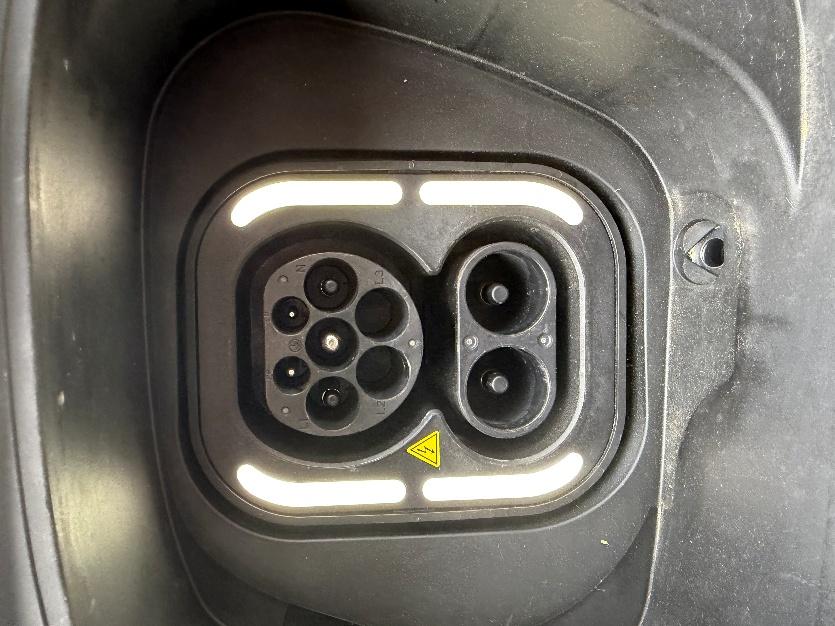
See the socket at the top? That’s what you use to charge with the cable supplied with the car. There’s also a cap or plug across the other socket - removing this plug means you can use a fast charger that uses both sockets together to give a really fast charge.
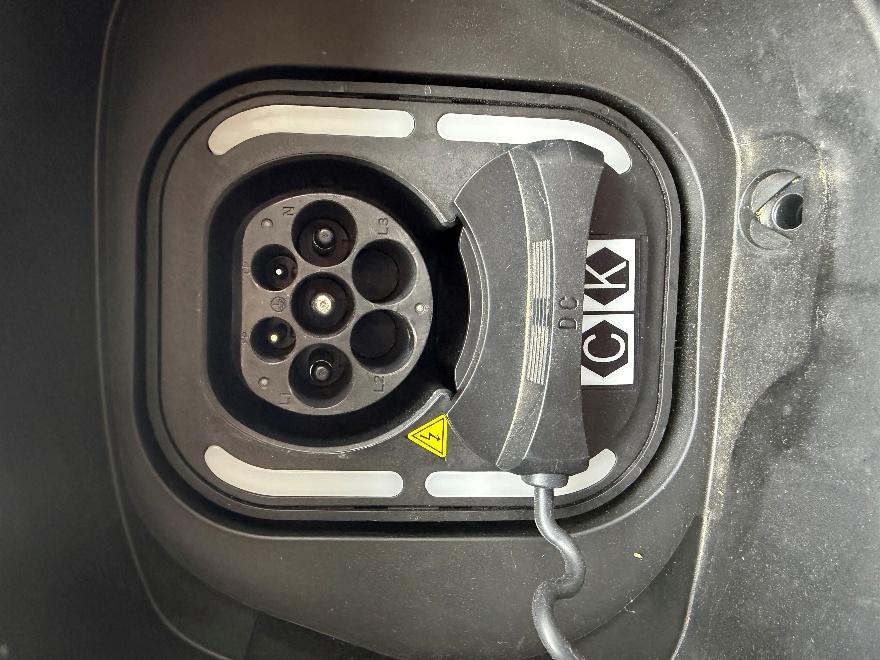
The photos above are of a CCS Type 2 port, which is the most common port in the UK. Some cars use the older CHAdeMO connection. This is mostly found on older electric vehicles (mainly Japanese, although newer EVs have moved to CCS) - vehicles such as the Nissan Leaf and e-NV200, the Mitsubishi Outlander PHEV, i-MiEV and MINICAB MiEV, and the older model of the Kia Soul.
Charging at home
The first option is a home charger, and there are a couple of choices. Firstly, what’s called a “granny charger”, which works off a 3-pin plug and uses the top socket. For my car this charges at between 2kW and 2.3kW. My car has a battery capacity of 64kWh, so it would take around 32 hours to charge to 100% if it were completely empty. That’s a theoretical time, as you generally won’t get to zero before charging - more likely there’ll be at least 20% or more left.
So what are kilowatt hours? How do they relate to miles, and what do I mean by percentage charge? Let’s explain. My car has a 64kWh battery, so 80% charged means around 54kWh of capacity. The car gives you an estimated range on a full battery - but a note of caution: the manufacturer’s figures assume perfect conditions, without using lights, heating, blower or wipers, so the range you actually achieve is usually less. After a few journeys the car will show you a miles-per-kWh figure. Mine currently achieves 3.4 miles per kWh, so for a full charge I can travel 3.4 × 64 ≈ 217 miles from 100% to empty - though I’m not sure I’d have the nerve to drive close to empty in case I inadvertently turned on the wipers and came to an early stop.
Charging at home on the granny charger lets me travel 3.4 miles for each kWh added to the battery. So at 2kW it gives me a further 6.8 miles of range for each hour it’s on charge. Regular charging this way isn’t recommended, though, due to the load it places on your electricity supply.
Fast charging
The second method at home is to install a dedicated home charger. These charge at a quicker rate - typically 7kW - which for my car adds 3.4 × 7, or about 24 miles of range, for each hour on charge. So in theory it reaches a full charge in a shorter time of around 9.5 hours. I say in theory, because the charging rate slows the closer to full the battery gets, so it takes longer to charge from 80% to 100% than from 40% to 80%. This is likely why charging rates are often quoted as 20–80%.
Charging in the community
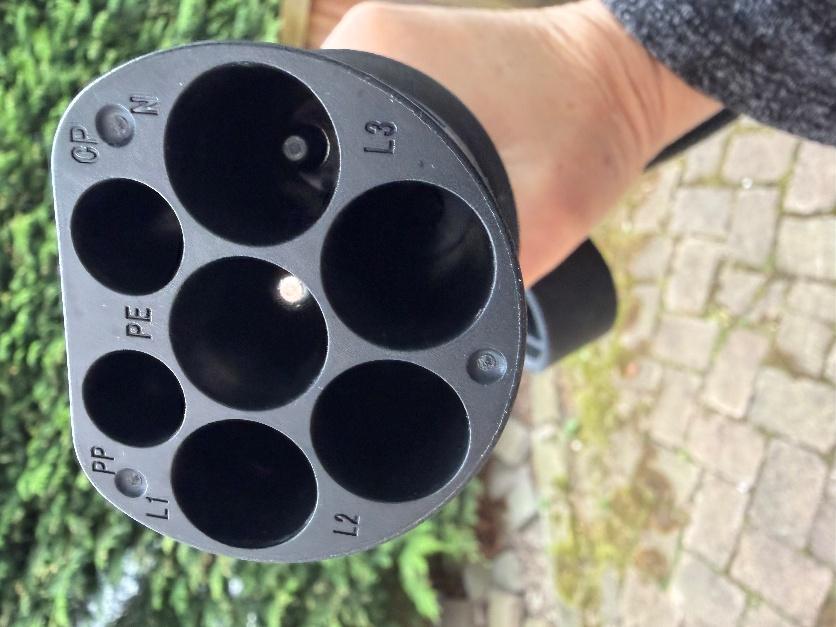
This brings me to charging out in the community. A number of supermarkets have untethered charging points - meaning you use your own charging cable, like the one above, and the rate is usually around 22kW. This is a great option if you’re going to be in the shop for a while: charging for 2 hours gets a 64kWh car from 40% to 80% while you shop. The cost per kWh is usually significantly cheaper than rapid or ultra-fast chargers.
Rapid charging
These are available in public places and generally charge at rates between 49kW and 75kW - a good option if you’re staying an hour or so, as the rates can be quite competitive.
Ultra-fast charging
The number of ultra-fast chargers is growing nationally, and most motorway service areas can now charge at 150kW or even 300kW, meaning that within 20–30 minutes you can be fully charged. These chargers are always tethered and use both the socket and plug elements of the port. You will pay a premium, though, as the cost per kWh is at the top end of the band - around 89p or 90p per kWh (April 2026).
How to pay for a public charge
Most are pay-as-you-go: a tap of your phone or card pre-authorises an amount, and the actual cost goes through to your bank after you finish. Some require you to download an app to access the charger, and some - such as BeEV - offer discounts for those paying a monthly subscription.
Finding a charger on the move
Most commercial EV chargers are part of a network with an app that tells you where the nearest charger is. Zapmap is a helpful, scheme-agnostic app that finds your nearest commercial charger, shows how many are available and the connector type, and details the speed, price per kWh, and whether they’re all in use.
A word about Tesla
Tesla have their own well-identified network, with specific Tesla connectors, and availability and charging are managed through the Tesla app. Non-Tesla owners can also use Tesla chargers, but may not have access to all of the app’s functionality.